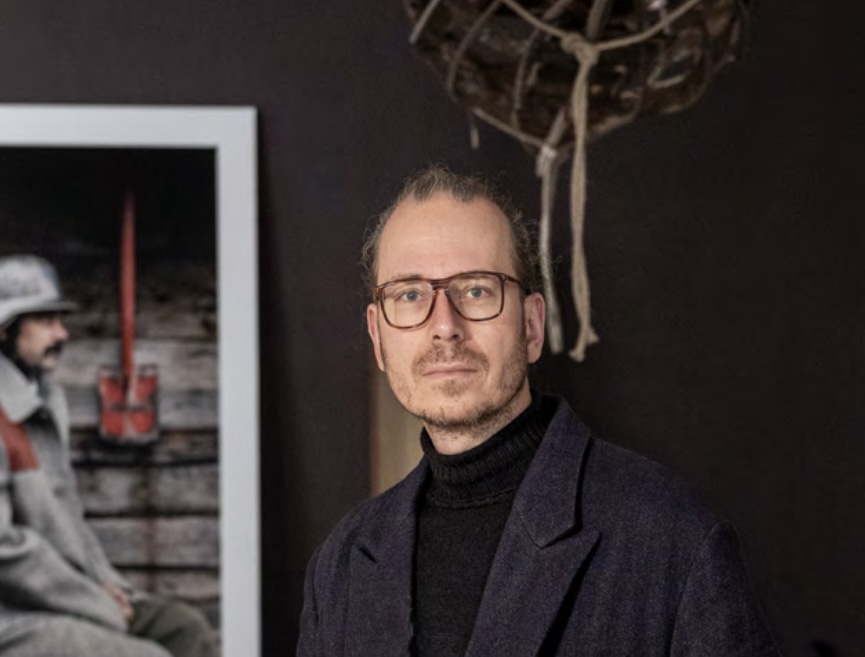
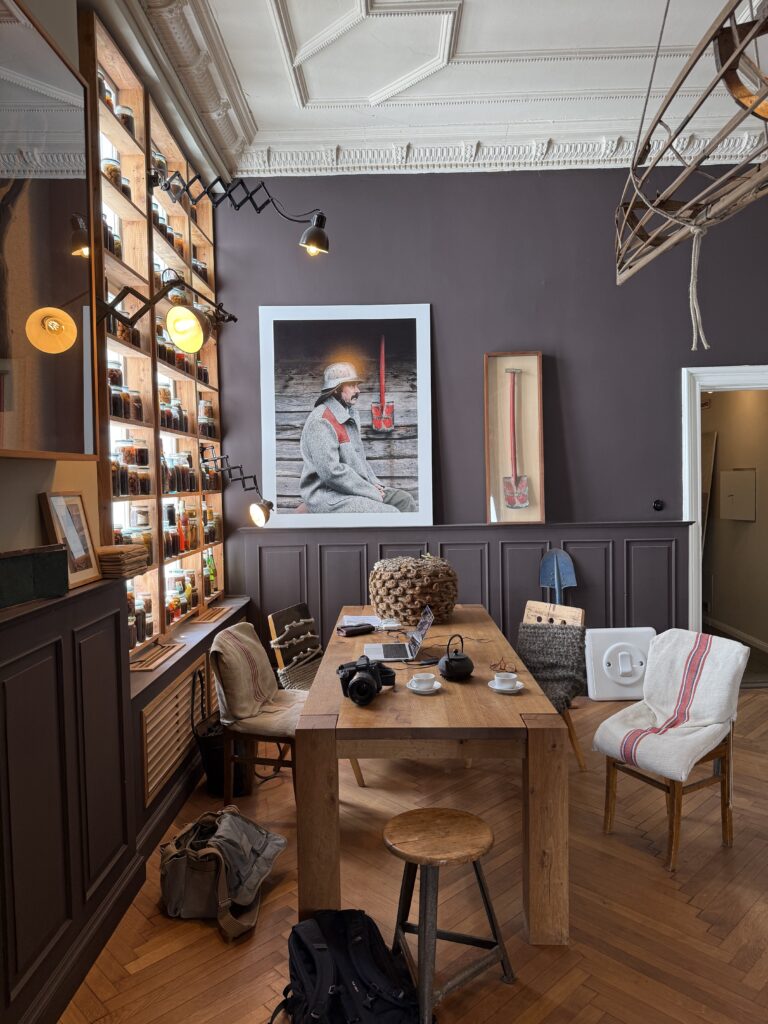
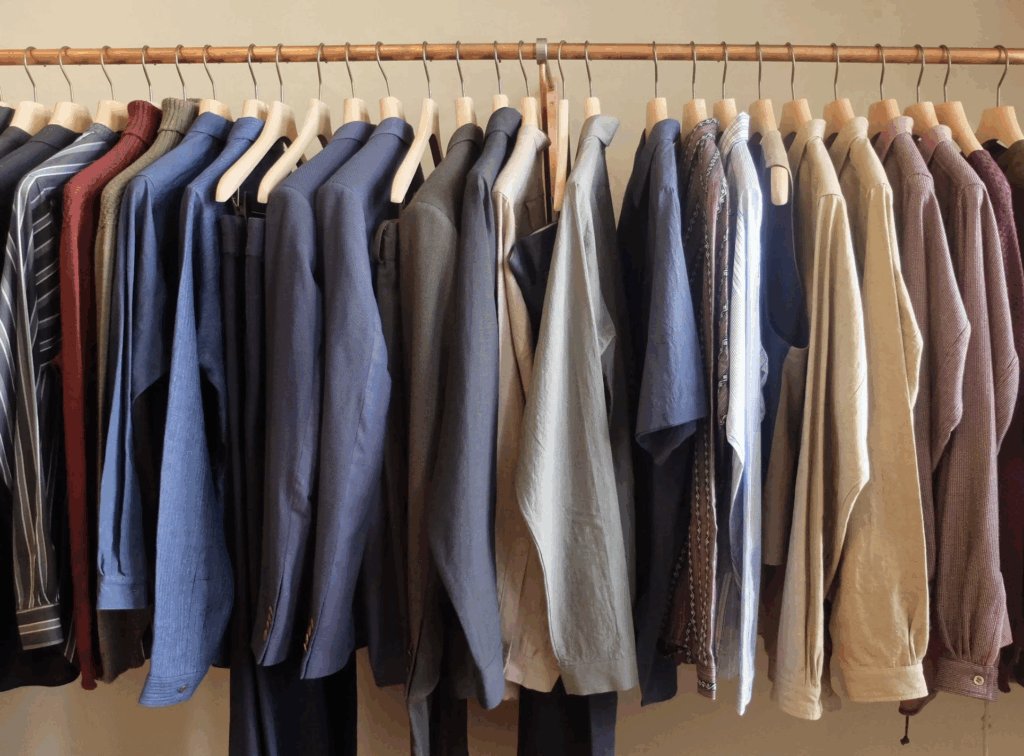
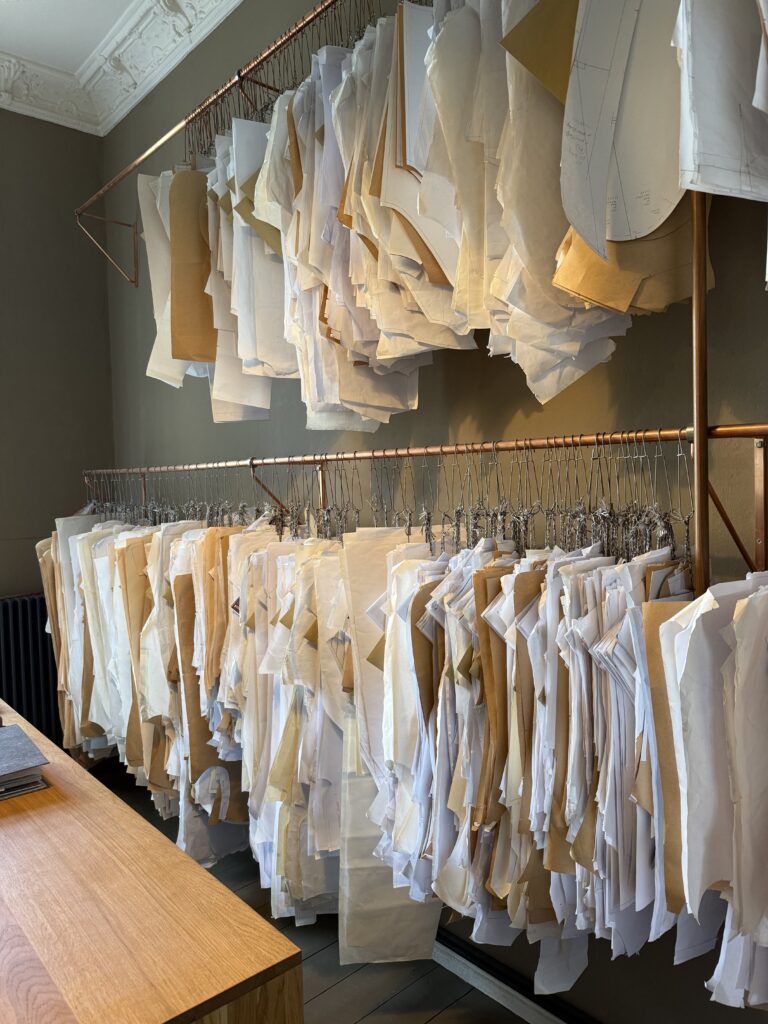
In a quiet Berlin atelier, rows of paper patterns hang like archives of past experiments. Nearby, garments in earthy wools and washed linens rest beside an ornate tiled stove. It is a space where history and craft meet — a room equal parts workshop and salon, where every detail whispers of patience, precision, and independence.
In an industry obsessed with speed, scale, and spectacle, Leder has built something rare: a fashion house that resists the mainstream. His collections do not chase trends, nor do they aspire to rapid expansion. Instead, they tell stories — of German history, of working-class traditions, of fleeting yet profound moments in everyday life. For Leder, fashion is less about commerce than about culture. Yet, paradoxically, it is precisely this approach that has made his brand endure.
At its core, Leder’s journey is not just about fashion but about entrepreneurship — proof that a business can be built on authenticity, storytelling, and restraint, values often overlooked in the pursuit of growth, profit, and market dominance.
The Founder’s Path – Origins & Vision
Born and raised in Nuremberg, Germany, Leder studied fashion at Central Saint Martins in London before moving to Berlin to establish his own label. From the outset, he rejected the path of commercial compromise. “I never wanted to work for a large fashion brand,” he recalls. “Independence allows me to do things exactly the way I feel they should be done.” His vision was clear: fashion should express cultural identity, not chase seasonal novelty.
His first breakthrough came not through a runway show or industry connection, but through persistence and friendship. As a student, Leder was a regular visitor to The Pineal Eye, an avant-garde boutique in London’s Soho district that stocked emerging designers. Over time, he befriended the owners, drawn to their appreciation for the experimental. One day, with little more than a handful of garments, he asked if he could hang his small collection in the store. To his surprise, they agreed. Those few pieces quickly caught attention, giving Leder his first taste of recognition and proving that his vision resonated beyond the sketchbook. Among those who noticed was a Japanese fashion scout for Edifice, who was so impressed by Leder’s work that he asked if Frank would create a small collection for the brand back in Japan.
At the time, Leder was still in his final year at university. For a student whose coursework demanded no more than a single pair of trousers in a given year, being asked to deliver nearly 80 pieces was a monumental leap.
His main concern, he recalls, was simply how to make it all. With no resources beyond time and determination, he became resourceful. In a matter of months, he taught himself how to source the right fabrics, found textile manufacturers willing to take a chance on a student, and pieced together the logistics of production. What could have been overwhelming instead became a crash course in business building: supply chains, vendor management, and operations.
In many ways, this was his first experience as a founder. The Edifice collection wasn’t just a test of his creativity; it was proof that he could navigate the real-world mechanics of turning an idea into a product. It was the moment he stopped being only a fashion student and began acting like a real fashion designer.
That early challenge also revealed the principles that would guide his career. Leder learned that independence required resourcefulness, that scale should never come at the cost of integrity, and that working closely with trusted partners mattered more than chasing mass exposure. These lessons carried with him to Berlin, where he set out to build a brand on his own terms.
The Business of Niche – Building a Brand without Compromise
Leder’s business model is unconventional, defined by choices that feel almost radical in today’s fashion landscape. He produces in small runs, often using deadstock fabrics or custom-made textiles from traditional mills in Germany and across the DACH region of Europe. His pieces are stocked in carefully selected boutiques across Europe, Asia, and the US, rather than through wide-scale distribution.
By design, the brand has never pursued mass-market growth. “For me, growth was never the goal,” Leder says. “I’d rather have a small circle of people who really understand the work than a big audience that doesn’t care.” Instead, he has cultivated a loyal global community of collectors who prize his work for its craftsmanship, the texture of his fabrics, and the stories each piece carries.
Rather than chasing the largest markets, he targets the most committed ones — niche communities of buyers who seek depth and meaning in what they wear. That strategy has found its strongest expression in Asia: over 70% of his sales come from Japan, where a cultural reverence for craftsmanship and narrative-driven design aligns perfectly with his philosophy. North America represents his second-largest market, while only around 2% of sales are in Germany — proof that his appeal lies less in nationality than in mindset.
For entrepreneurs, the lesson is clear: the best markets are not always the most obvious ones. Success often comes from serving the customers who truly “get it” — wherever they are. In startup terms, it’s about finding not just a market, but the right one, and then going deep rather than wide. Leder shows that cultivating a small but devoted audience can build a more resilient business than chasing the masses — a reminder that global niches often outperform local majorities.
Craft as Entrepreneurship – Products as Narratives
If his distribution strategy shows the discipline of independence, his design process reveals the heart of it. Markets may determine where his clothes travel, but fabrics determine what they mean — and for Leder, that meaning is where entrepreneurship and artistry converge.
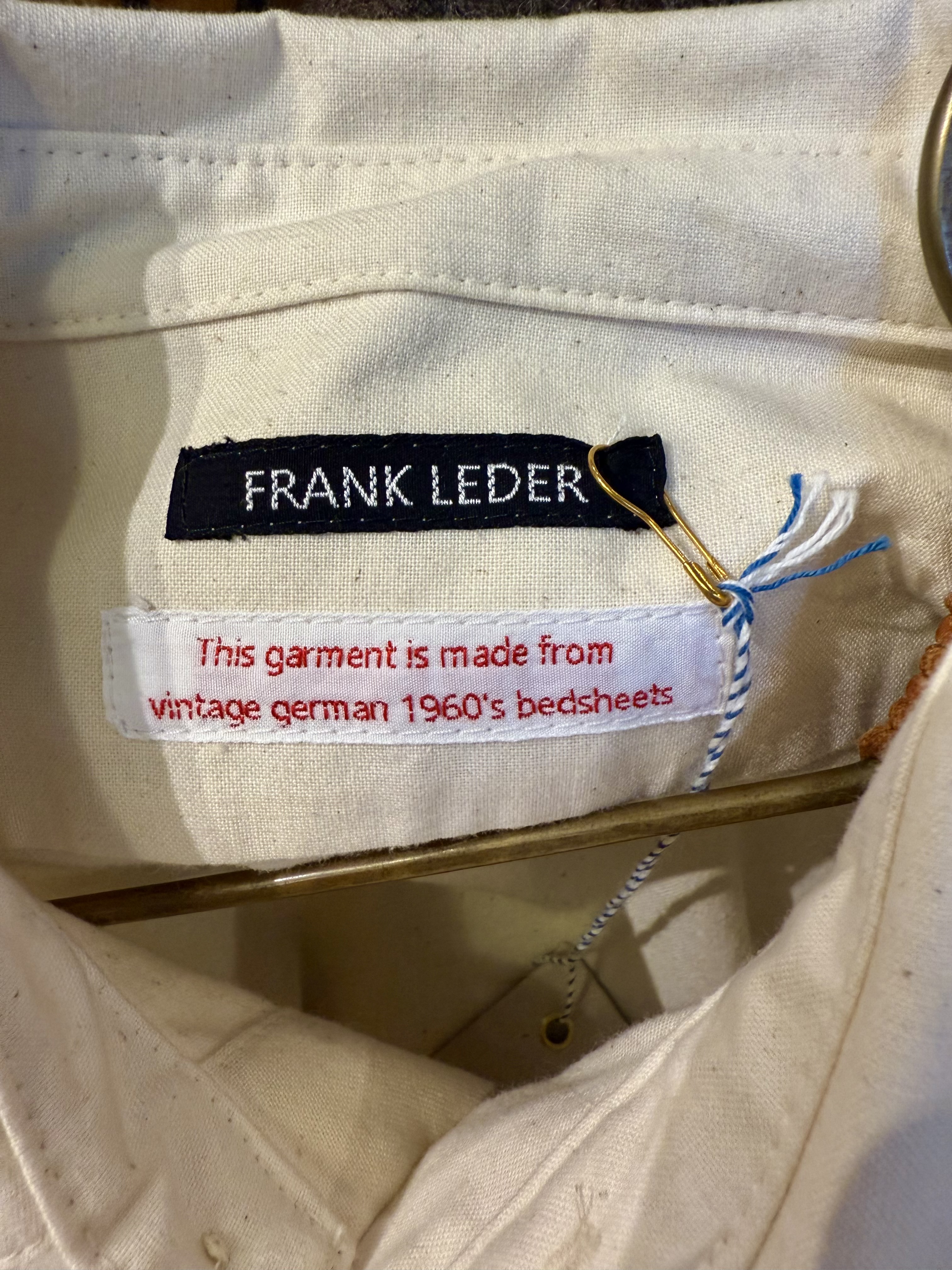
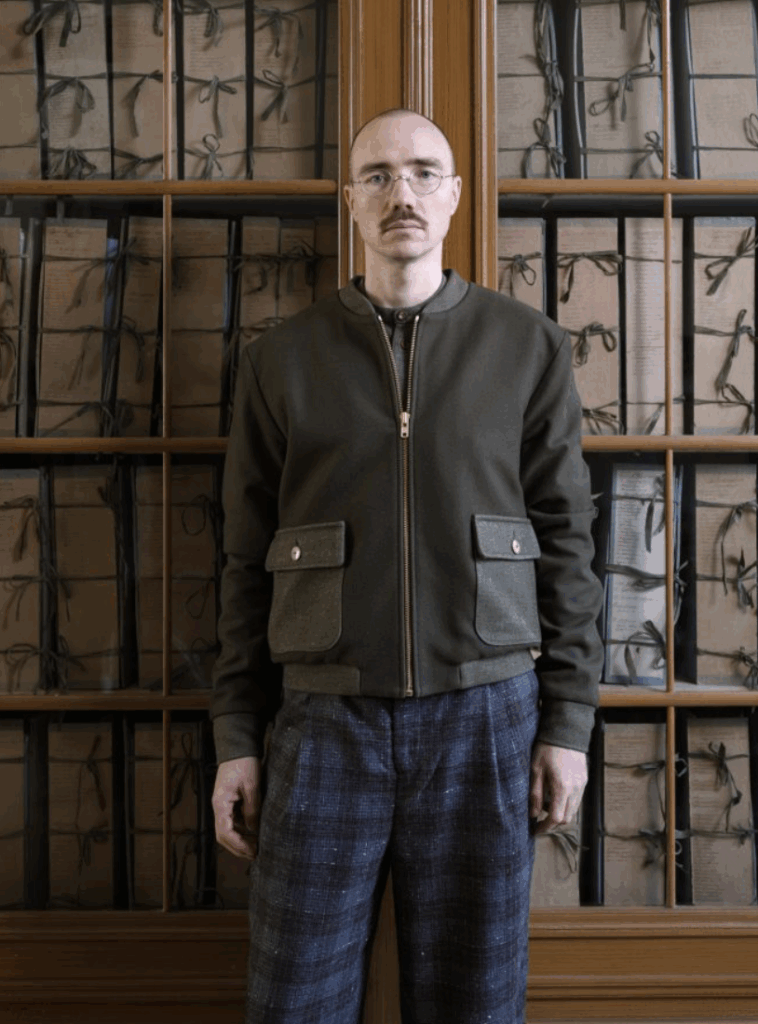
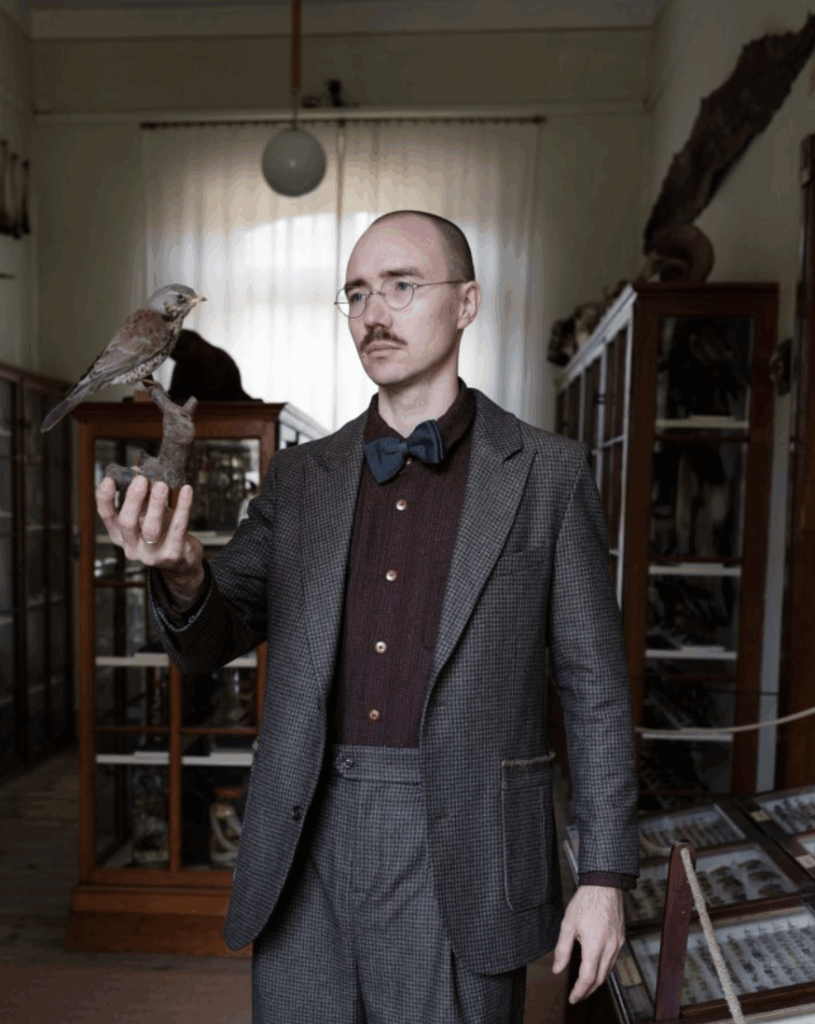
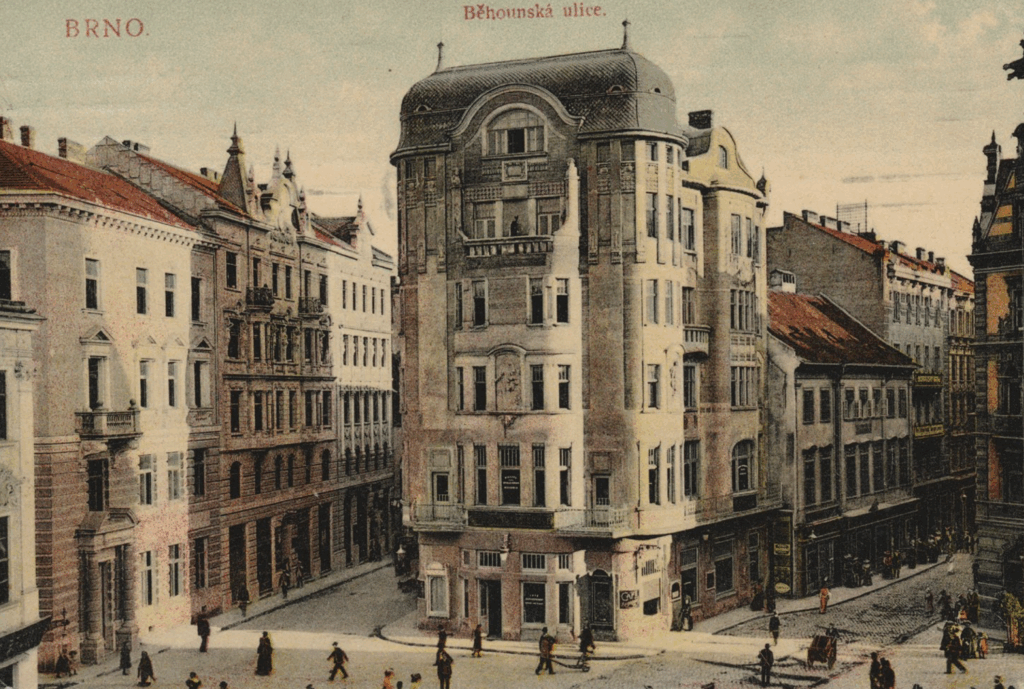
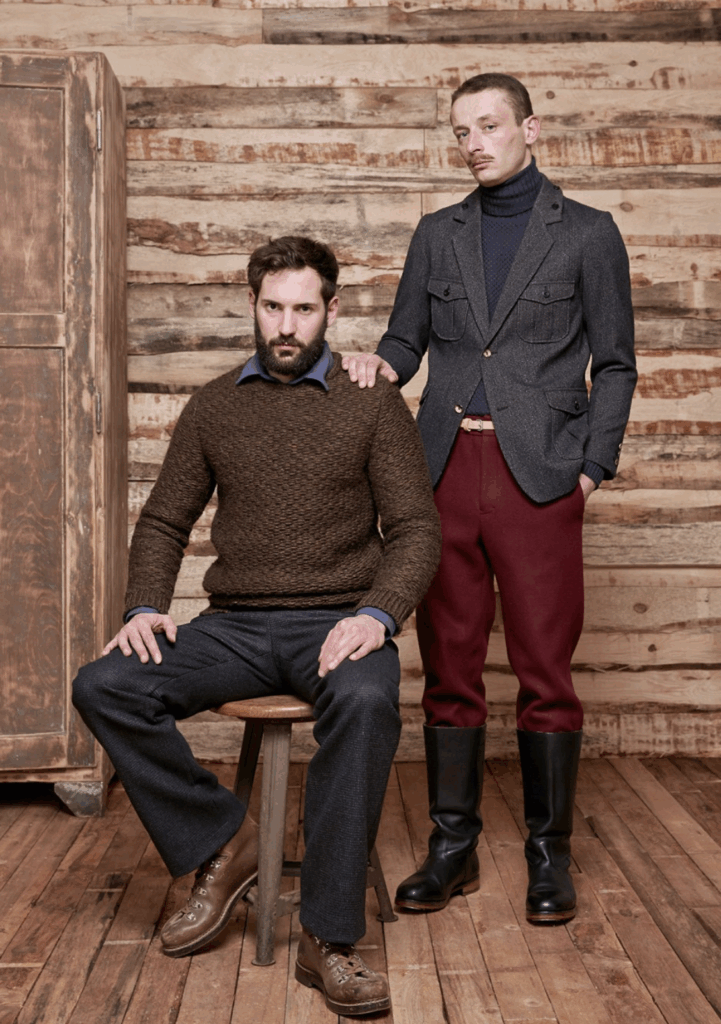
Every collection is a story. One season might reference the lives of miners in the Ruhr Valley, another the atmosphere of a German tavern, another the faded elegance of vintage household fabrics. To wear a Frank Leder jacket is to wear a fragment of cultural history, transformed into modern form. Even the fabrics themselves often carry narrative weight — sourced from traditional mills, deadstock archives, or materials once used for workwear and repurposed into contemporary garments. When I ask Frank where his ideas for a collection come from, he tells me that “it all starts with the fabric.” Then he decides what “ideas” fit, given the fabric he has.
This approach is more than artistry; it is strategy. By embedding narrative into his products, Leder creates not just clothing, but meaning. In an economy where differentiation is everything, storytelling becomes a moat. It gives his customers not only something to wear, but something to belong to.
Entrepreneurs across industries can learn from this. A startup founder, like a designer, must convince people that their product is more than just another option in a crowded market. Whether it is a coffee roaster tracing beans back to a single farm, a craft spirits company rooted in local tradition, or a software brand that frames itself as part of a larger cultural movement, the principle is the same: products infused with story transform from commodities into cultural objects.
Leder shows that when a product carries identity, history, and context, it ceases to be replaceable. It becomes part of a narrative customers want to join — and that is how entrepreneurship moves beyond commerce into culture.
Lessons for Entrepreneurs
What, then, can aspiring entrepreneurs take from Frank Leder’s model?
- Authenticity attracts. Staying true to your vision — even at the expense of scale — builds trust with the right customers.
- Scarcity creates desire. Limited production fosters loyalty, exclusivity, and long-term value.
- Culture is currency. Products infused with history, meaning, and story resonate more deeply than those that compete only on price or function.
- Independence sustains. Success doesn’t always mean chasing unicorn status or external capital; it can also mean building something enduring, self-sufficient, and true to the founder’s intent.
Together, these principles form more than a philosophy of fashion — they outline a blueprint for any entrepreneur seeking to stand apart in a crowded market. Leder’s work shows that brands that stay disciplined to their vision often endure precisely because they resist compromise.
The Future – Longevity through Independence
As conversations around sustainability intensify, Leder’s model looks prescient. By rejecting mass production and embracing durability, he anticipated the slow fashion movement long before it became a buzzword. His garments are built to last — not just physically, through sturdy fabrics and meticulous construction, but emotionally, as objects imbued with meaning. “I want my pieces to live with people — to be worn, repaired, and passed on,” he says. “That’s what gives them value.” They are made to be worn, repaired, and treasured over time rather than discarded.
In many ways, his approach mirrors the principles now championed by the circular economy: extending product life cycles, reducing waste, and designing with longevity in mind. Consumer fatigue with fast fashion’s disposability has only made this mindset more relevant. Just as diners increasingly value farm-to-table transparency, or tech users look for devices that last instead of being engineered for obsolescence, Leder’s clients seek clothing that resists the churn of seasonal novelty.
This places him in quiet opposition to the disposability that defines much of modern consumption. Where fast fashion thrives on constant novelty, Leder thrives on continuity — a steady rhythm of collections that evolve, reference, and reinterpret without ever chasing the seasonal churn.
Conclusion – Beyond Fashion
Frank Leder’s story is ultimately not about clothing, but about building with courage — the willingness to pursue a vision on one’s own terms. In a world that measures success in scale and speed, his path shows that endurance, purpose, and integrity can matter more than growth for its own sake. For entrepreneurs, the challenge is clear: don’t just chase size or speed. Build something authentic enough to last.
The call to action is simple: resist the pressure to scale at any cost. Build with integrity. Build with patience. Build something that lasts. The real test is not how fast you build, but whether what you build deserves to last.
For more on Frank Leder’s work, readers can reach him directly at mail@frank-leder.com or follow his studio updates on Instagram at @franklederofficial.